

Body language for interviews can make or break your chances of leaving a lasting impression. It’s not just what you say, but how you say it—through gestures, posture, and eye contact—that can showcase confidence and professionalism. In this guide, we’ll explore the essential elements of body language for interviews and how mastering these skills can set you apart, whether you’re preparing for a USMLE residency interview or any other professional setting.
Positive Body Language in USMLE Residency Interviews
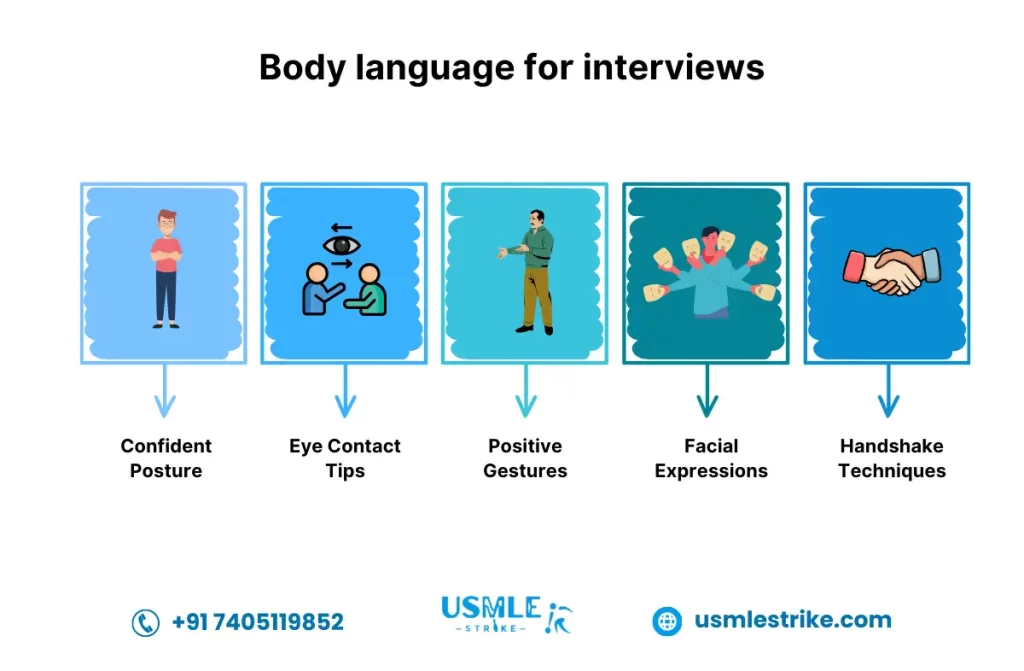
If you’re aiming to land a residency, USMLE Strike emphasizes the importance of body language for interviews. Here’s why: residency interviews are about showing you’re not only capable but also approachable and professional. From the moment you walk in, your body language speaks for you before you say a single word. Positive body language conveys confidence, attentiveness, and reliability—qualities every interviewer wants to see.
Tips for Positive Body Language:
- Eye contact: Maintain steady eye contact to show engagement without staring or making it awkward.
- Open gestures: Use your hands naturally when speaking. Avoid crossing your arms, which can make you seem defensive or closed off.
- A relaxed smile: This helps build rapport and puts everyone at ease.
First Impressions Matter
First impressions last a lifetime, especially during interviews. Did you know that the way you enter the room can influence the outcome? From your handshake to your posture, your body language communicates volumes. Walk in with confidence, maintain eye contact, and greet the interviewer warmly.
For USMLE candidates, this matters even more. USMLE residency interviews are competitive, and showing confidence can set you apart. Keep in mind that countries that accept USMLE prioritize professionalism during interviews, and first impressions are key.
The Power of Eye Contact
Eye contact is a crucial part of body language for interviews. It helps establish trust and shows that you are engaged in the conversation. Here are a few tips:
- Maintain balance: Too much eye contact can feel intense, while too little can make you seem distracted. Aim to hold eye contact for 4-5 seconds at a time.
- Show attentiveness: Nod occasionally and respond naturally to what’s being said to demonstrate active listening.
If you’re preparing for USMLE residency interviews, remember that strong eye contact reflects confidence and sincerity—qualities that residency programs value. Use this as part of your body language interview skills to leave a positive impression.
Posture Speaks Volumes
Your posture can reveal a lot about your confidence and professionalism. During interviews, sitting up straight signals that you’re attentive and respectful. Leaning slightly forward shows interest in the conversation, while slouching can make you seem disengaged.
For those wondering, is USMLE valid in India? or preparing for interviews in countries that accept USMLE, posture is a universal nonverbal cue. Whether you’re in India or any other country, a confident posture leaves a positive impression.
The Subtle Role of Hand Gestures
Hand gestures, when used correctly, can reinforce your points and make you seem more articulate. However, overusing them can have the opposite effect. Here are some practical tips:
- Keep it natural: Use your hands to emphasize key points but avoid waving them around excessively.
- Avoid fidgeting: Tapping fingers or playing with objects can make you seem nervous or distracted.
- Match your tone: Calm and controlled gestures convey professionalism.
In residency interviews, including those in countries that accept USMLE, using confident hand gestures can help you communicate more effectively. This nonverbal cue can distinguish you as a polished and prepared candidate. Practice incorporating these gestures as part of your interview body language tips.
Facial Expressions Reflect Engagement
Your face often reveals more than your words. Smiling, nodding, and maintaining a relaxed expression show that you are approachable and attentive.
For example:
- Smiling during introductions: A genuine smile helps set a positive tone.
- Matching your expression to the topic: If discussing serious matters, maintain a neutral or empathetic expression. When discussing achievements, show enthusiasm.
In countries that accept USMLE, facial expressions play a critical role in making a personal connection during interviews. Pay attention to your expressions to convey warmth and professionalism. Strong facial expressions are key to mastering body language interview skills.
Mirroring Techniques
Mirroring involves subtly mimicking the interviewer’s body language to build rapport. It’s a psychological technique that creates a sense of connection and trust.
How to use mirroring effectively:
- If the interviewer leans slightly forward, do the same.
- Match their tone and energy level to show you’re on the same wavelength.
- Avoid making it too obvious. Mirroring should feel natural.
Whether your residency interview is in India or other countries where USMLE is valid, this technique helps create a sense of understanding and alignment. Including this in your body language interview skills can significantly boost your chances.
Avoiding Nervous Habits
Nervous habits can distract the interviewer and detract from your confidence. Common habits include:
- Fidgeting with your hands or clothing.
- Avoiding eye contact or looking down frequently.
- Repeatedly touching your face or hair.
Practice managing these habits by recording mock interviews. This is especially important for residency candidates preparing for interviews in countries that accept USMLE.
The Role of Personal Space
Respecting personal space during interviews shows that you are professional and considerate. Avoid leaning in too much or sitting too close, as it can make the interviewer uncomfortable. Maintain a respectful distance of about 2-3 feet during in-person interviews.
For virtual interviews, ensure your face is well-framed and maintain good posture. If you’re pursuing opportunities in countries that accept USMLE, personal space norms may vary, but professionalism is a universal standard.
How Your Body Language Affects Your Residency Interview
Body language for interviews directly influences how interviewers perceive you. It’s not just about answering questions correctly but about how you carry yourself.
For USMLE candidates, this means showcasing confidence through:
- Maintaining good posture.
- Making natural eye contact.
- Using open and engaging gestures.
Residency interviews are your chance to stand out, especially in competitive programs in countries that accept USMLE. Strong body language can leave a lasting positive impression. These interview body language tips are essential for success.
Best Practices for Residency Interviews
Here are some best practices to help you succeed:
- Practice mock interviews: Record yourself to identify areas for improvement.
- Focus on consistency: Ensure your verbal and nonverbal cues align. Saying you’re confident while slouching sends mixed signals.
- Dress professionally: Your outfit contributes to the overall impression. Wear something appropriate for the setting.
These tips apply whether your interview is in India or other countries where USMLE is valid. Mastering body language interview skills can give you an edge.
What to Consider During Virtual Job Interviews
Virtual interviews have their own set of challenges. Here’s how to adapt your body language for interviews online:
- Maintain eye contact: Look into the camera, not the screen, to simulate direct eye contact.
- Stay centered on screen: Frame yourself so that your head and shoulders are visible, maintaining good posture.
- Minimize distractions: Keep your background clean and ensure a quiet environment.
Virtual residency interviews, whether in countries that accept USMLE or elsewhere, demand the same level of professionalism as in-person meetings. Practice to ensure your body language translates well on screen. Follow these interview body language tips to shine online.
How You Can Develop Professional Body Language
- 🪞 Practice in Front of a Mirror
- Observe how you stand, smile, and use your hands.
- Identify and correct awkward or nervous gestures.
- Helps build self-awareness and confidence in your posture and expressions.
- 👀 Observe Confident Professionals
- Watch speakers like Barack Obama or Oprah Winfrey to see effective body language in action.
- Pay attention to their eye contact, gestures, and calm demeanor.
- Try to replicate their posture, tone, and non-verbal presence in your own style.
- 🔁 Make It a Daily Habit
- Spend a few minutes each day practicing good posture, facial expressions, and gestures.
- Use daily conversations, video calls, or presentations as real-time practice opportunities.
- With repetition, confident body language becomes second nature.
- 🗣️ Record Yourself for Feedback
- Use your phone to record short mock interviews or presentations.
- Review the video to notice fidgeting, lack of eye contact, or unnatural expressions.
- Make small adjustments and track your progress over time.
- 😊 Be Mindful of Facial Expressions
- Maintain a relaxed, natural smile and avoid tense or blank expressions.
- Show active listening through subtle nods and eye engagement.
- Avoid overacting—aim for calm and composed energy.
- 🤝 Control Your Gestures and Movement
- Keep your hand movements natural and purposeful.
- Avoid crossing your arms, tapping, or pacing while speaking.
- Stay grounded and still when making key points to appear focused.
Conclusion
Body language for interviews is the secret weapon for creating a lasting impression. Whether it’s through confident eye contact, a warm smile, or an open posture, mastering these skills can elevate your performance and help you stand out. Remember, body language plays a crucial role in USMLE residency interviews and beyond.To ensure success in competitive residency programs across countries that accept USMLE, focus on both verbal and nonverbal communication. USMLE Strike reminds you that preparation is key, so take the time to refine your skills and step into your next interview with confidence.
Want to learn more about USMLE related content Check out our YouTube Channel Videos