

You made it through years of study, exams, and clinical rotations. Now you are staring at a screen trying to decide which programs go where on your list. It feels like a lot of pressure, and honestly, it is. But once you understand how the process actually works, building your list gets a lot less scary.
If you are wondering how to rank residency programs, this guide walks you through the whole thing, from what a rank order list even is to the mistakes that trip students up every year. Match dates and fees change each year, so always check the current NRMP calendar for your specific cycle.
What is a Rank Order List
Your rank order list is exactly what it sounds like. It is the order in which you would want to join the programs you interviewed with, from your top choice down. The National Resident Matching Program uses this list, along with a list from each program, to figure out where you end up training.
Only a certified list gets used in the Match. Entering programs into the system is not enough on its own. You need to review it and certify it before the deadline, or it will not count.
One more thing to keep in mind early. A certified rank order list is a binding commitment. If you match to a program, you are expected to train there. So only rank places you would genuinely be willing and happy to attend, not places you added just to fill out the list.
How the NRMP Match Algorithm Works
Here is the short version. You submit your list. Every program you interviewed with submits their own list ranking the applicants they want. The algorithm is applicant proposing, which means it works through your list from the top down, trying to place you into your most preferred program first. If that does not work out, it moves to your next choice, and so on.
There is generally no advantage to ranking a program lower just because you think it is less likely to want you. Ranking a reach program first does not hurt your chances at your second or third choice if the first one does not work out. Rank programs in your true order of preference and let the algorithm do its job.
Why Your Interviews Matter When Ranking Programs
Every interview day gives you more than just a chance to be evaluated. It gives you a real look at the people you would be working with for the next several years. Pay attention to how residents talk about their workload, how faculty answer your questions, and how you feel walking out of the building.
Write your impressions down right after each interview while they are still fresh. A week later, programs start to blur together, and you will be glad you have notes to look back on.
What to Consider When Ranking Residency Programs
A few things tend to matter more than people expect once they actually start ranking.
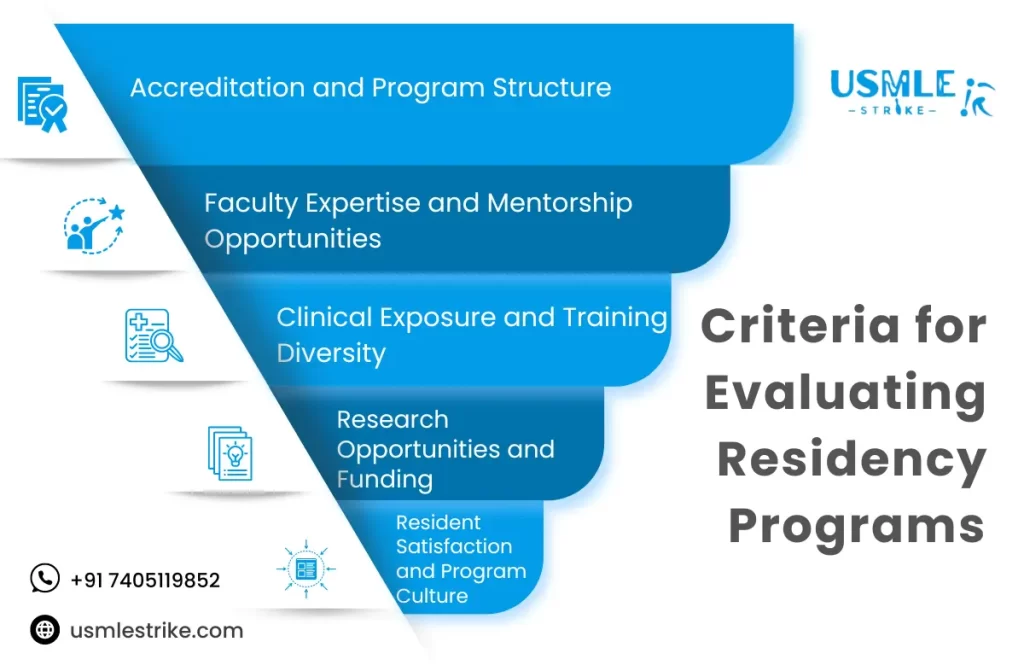
Program reputation counts, but only within your specialty. A big name hospital does not always mean a strong program in the field you are entering.
Program culture and faculty support shape your day to day experience more than almost anything else. A program with engaged faculty who actually check in on residents is worth more than one with a famous name and little support.
Workload varies a surprising amount between programs, even within the same specialty. Ask current residents directly about call schedules and burnout.
Location shapes your life for years. Think about how close you want to be to family, what the cost of living looks like, and whether you can picture yourself actually living there.
Training opportunities matter just as much as prestige. Look at case volume, research support, and whether the program prepares you for the career you want after residency, including any fellowship plans.
If you are an international medical graduate, add visa sponsorship, the program’s experience working with IMGs, and your ECFMG certification status to this list. A program can look great on paper and still not be a realistic option if the visa pathway does not line up with your situation.
How Many Residency Programs Should You Rank
There is no single ideal number here, so be wary of any guide that gives you a magic number. Rank every program where you would genuinely be willing and able to train, in your true order of preference. How many that ends up being depends on your specialty, your application strength, how your interviews went, and your own circumstances.
NRMP Ranking Fees and Maximum Number of Ranks
For the 2026 Main Residency Match, your standard registration fee covers up to 20 unique program codes on your list. That 20 program number is a fee threshold, not a recommended target. If you have more than 20 programs where you would genuinely be happy to train, you can rank additional ones for $30 per program code, up to a maximum of 300 total ranks. Lists with 100 or more ranks carry an additional length fee.
Fees and thresholds can change from year to year, so check NRMP’s current fee schedule before you certify your list.
How to Build Your Rank Order List
Group your programs into rough tiers, such as top choices, strong fits, and lower priority options. Avoid thinking of any program as a guaranteed match. No program is a sure thing simply because you consider it easier to get into.
Go back through your interview notes program by program instead of relying on memory alone.
Think about your long term goals, including whether you plan to pursue a fellowship later, and factor that into which programs give you the strongest foundation.
Account for your actual life. Commute, housing costs, and family needs are not small details, they shape whether you will thrive somewhere.
Keep your future specialty or fellowship plans in mind rather than ranking purely on how a program looks today.
Common Mistakes to Avoid
Rushing through the list is the most common mistake. Give yourself real time to sit with your notes and think it through, rather than finishing it in one sitting the night before it is due.
Ignoring your gut feeling is another one. If something about a program felt off during your visit, that feeling usually means something, even if you cannot fully explain it.
Chasing prestige over fit sends a lot of residents into programs where they end up unhappy. A well known name does not guarantee a good experience for you specifically.
Skipping advice from mentors is a missed opportunity. People who have watched you grow through medical school often see things about fit that you might miss yourself.
Ranking a program you would not actually accept is one of the more serious mistakes, since a certified list is a binding commitment. Don’t add a program just to pad your numbers.
Making your list unnecessarily short can also work against you. If you have real options beyond your first few choices, ranking them gives the algorithm more to work with. Just never rank somewhere you would not actually go.
How to Certify Your Rank Order List
Once you have entered your programs in the NRMP system, review the order carefully. Check that every program on the list is somewhere you would genuinely accept a position. When you are confident in the order, certify the list in the system.
You can uncertify, edit, and recertify as many times as you need before the deadline. Once the certification deadline passes, the list is locked and NRMP will not modify it for any applicant.
2026 NRMP Rank Order List Timeline
For the 2026 Main Residency Match, ranking opened on February 2 at 12 p.m. ET. The rank order list certification deadline was March 4 at 9 p.m. ET. Applicants learned their match status on March 16, when SOAP also began for anyone who needed it. Match Day itself was March 20.
These dates shift every year, so treat this as a reference point for the 2026 cycle rather than a fixed yearly pattern. Always confirm the current deadlines on NRMP’s own calendar for your specific Match year.
In practical terms, use your interview season to take notes right after each interview. Once interviews wrap up, compare programs systematically using those notes and start drafting a preliminary order. In the weeks before the certification deadline, review your final list one more time, confirm you would genuinely accept every program on it, and certify it with time to spare.
Tips for IMGs Ranking Residency Programs
If you are an international medical graduate, a few extra factors deserve real weight on top of everything else in this guide.
Confirm each program’s visa sponsorship situation, whether that is J-1 or H-1B, and make sure it is actually workable for your circumstances.
Check your ECFMG certification status and make sure it will be complete in time to meet Match requirements.
Ask about the program’s track record with IMGs specifically, including how many are currently in the program and how they have been supported. A program being described informally as IMG friendly does not guarantee sponsorship or a smooth path, so verify the details directly with the program rather than relying on secondhand reputation.
Weigh location and state licensing considerations carefully, since some states have additional requirements for IMGs down the line.
Should You Rank a Preliminary Program
You can rank a preliminary program if you understand what it actually offers and would genuinely accept the position. Preliminary programs often provide only one year of training, so before ranking one, look closely at the program structure and think through how it fits your longer term training plan.
Getting Extra Support
Applicants who want an outside perspective often find it helpful to work with a residency advisor or mentor. A second set of eyes can help you review interview impressions, compare programs side by side, and organize your priorities before you certify anything.
USMLEStrike, founded by Dr. Apurva Popat, offers this kind of one on one guidance for applicants working through the ranking process.
The Bottom Line
Ranking residency programs comes down to being honest with yourself about what you would genuinely accept, not what looks impressive on paper or safest on a spreadsheet. Take your time, trust what you felt during your interviews, confirm your dates against the current NRMP calendar, and lean on people who know you well when you need a second opinion. Do that, and you give yourself the best shot at landing somewhere you will actually be glad to train.
Read also: Residency Interview Mistakes to Avoid