

The USMLE exam in India is a three-tier examination to obtain a medical licensure in the United States. All medical graduates aspiring to US Career are required to pass this exam after taking the standard coaching for the USMLE course from the USMLE coaching centres for a successful completion of the exam and begin practicing medicine.
Exam Format and Syllabus
Before selecting the coaching centre for the preparation of USMLE Exam in India, a candidate should know about the exam format and the syllabus regarding the three phases of the USMLE exam. The USMLE Step 1 exam is a computer- based exam consisting of 7 one-hour question blocks and includes 1 hour of break time.
- The subjects included in the USMLE Step 1 are Anatomy, Biochemistry, Biostatistics and Epidemiology, Microbiology and Immunology, Physiology, Pathology, Pharmacology, Behavioural Sciences, Medical Ethics, Genetics and Aging.
- The USMLE Step 2 CK is a computer based, 1-day, 9-hour lengthy examination. It consists of 8 1-hour question blocks and includes an hour of break.
- Subjects included in the USMLE Step 2 are: Internal Medicine, Paediatrics, Obstetrics and Gynaecology, Psychiatry, Preventive Medicine, Surgery, and other areas relevant to provision of care under supervision and the last tier to take the USMLE course for preparing the USMLE exam in India, is to give the USMLE Step 3 that has to be taken after starting the residency in USA.
Best USMLE Coaching Centre in India
USMLE Strike
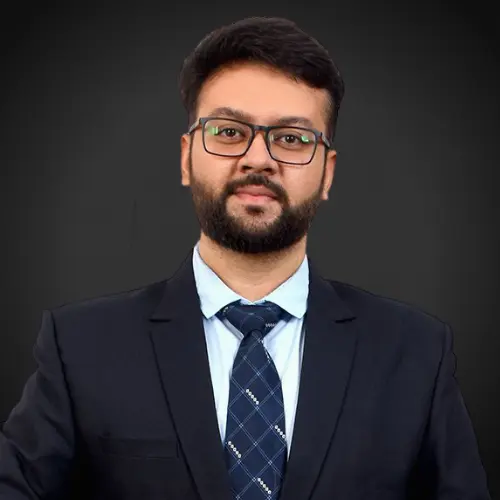
USMLE Strike, founded by Dr. Apurva Popat, specializes in offering top-notch coaching services tailored specifically for USMLE exam preparation. Dr. Popat, an Internal Medicine physician at Marshfield Clinic, Wisconsin, USA, has been instrumental in guiding numerous aspiring medical professionals towards achieving their dreams. With a strong background in medicine and a reputation for creating highly personalized USMLE coaching programs, he has become known as one of the top USMLE tutors globally.
Our program is designed to provide comprehensive support to students, ensuring they are fully equipped to tackle the challenges of the USMLE exams with confidence. We boast a team of expert faculty members who are dedicated to guiding students through every step of their USMLE journey. With their extensive knowledge and experience, our faculty delivers engaging lectures, facilitates interactive discussions, and provides personalized guidance to help students understand and master the exam content effectively.
At USMLE Strike, we prioritize creating an exam-like environment for our students to enhance their readiness. Through regular mock exams and practice sessions, we simulate the exam conditions, allowing students to familiarize themselves with the format and build their confidence.
Our coaching program covers all aspects of the USMLE exams, ensuring that students gain a thorough understanding of the content and format of each step. Whether it’s Step 1, Step 2 CK, or Step 3, we provide comprehensive support to help students excel in their exams.
With our commitment to student success and our dedication to providing top-quality coaching services, USMLE Strike is the ultimate destination for students seeking effective USMLE exam preparation. Join us on your journey towards USMLE success!
Courses Provided by the Best USMLE Coaching Centre in India
| Course Name | Access Duration | Contents Included | Best For |
|---|---|---|---|
| USMLE Strike Live Video Classes | Based on course plan | Interactive classes by experienced mentors | Students seeking live guidance |
| USMLE Step 1 Hybrid + Step 2 CK + Support till Match | Long-term (customized) | Step 1 + Step 2 CK resources + continuous support till residency match | Complete USMLE journey planning |
| Step 1 Course + Lecture Notes + Q Bank | 1 year | 116 files, 61 tests, 158 videos – First Aid aligned content | Comprehensive Step 1 preparation |
| Step 1 Notes | Unlimited | 110+ handwritten/scanned notes from First Aid & UWorld | In-depth review for Step 1 |
| Step 2 CK Notes | Unlimited | 24 concise handwritten/scanned review notes | Focused Step 2 CK preparation |
| Step 1 Q Bank | Unlimited | 50+ modules, 69 tests, 7000+ MCQs | Extensive Step 1 question practice |
| Step 2 CK Q Bank | Unlimited | High-yield questions for Step 2 CK | Step 2 CK test practice |
| CV + PS Editing + Interview Prep | Customized | Personalised guidance on CV, personal statement, and interview preparation | Residency application support |
Strategy Plan for the USMLE Exam in India
The USMLE Strategy Plan can aid the aspirants based on assessment including: The current stage of preparation, utilization of resources, sticking to the study patterns, active recalling, setting up realistic goals with a customized strategy plan. The sessions to prepare for the USMLE exam in India will happen via Zoom where 1 Learning Material (1 File) will be provided.
Studying for the USMLE Exam in India
Preparing for the USMLE exam in India requires dedication and a well-structured study plan. Here’s how Indian medical students can effectively prepare:
- Build a Solid Foundation: Start by mastering basic sciences (Step 1) and clinical knowledge (Step 2 CK). Focus on key subjects like anatomy, physiology, pathology, and pharmacology for Step 1.
- Study Materials:
- Use high-yield resources such as First Aid for the USMLE Step 1, UWorld, and Kaplan Medical study guides.
- Utilize online platforms offering USMLE-style question banks for practice exams.
- Create a Study Schedule:
- Allocate 6-12 months for each step, depending on your familiarity with the subjects.
- Focus on conceptual understanding rather than rote memorization.
- Join USMLE prep courses in India that offer specialized guidance and support.
- Mock Exams: Regularly practice using full-length mock exams that mimic the actual USMLE exam pattern. This will help you build stamina and time management skills.
By following a well-organized approach, students can be well-prepared for the USMLE exam in India and achieve a competitive score.
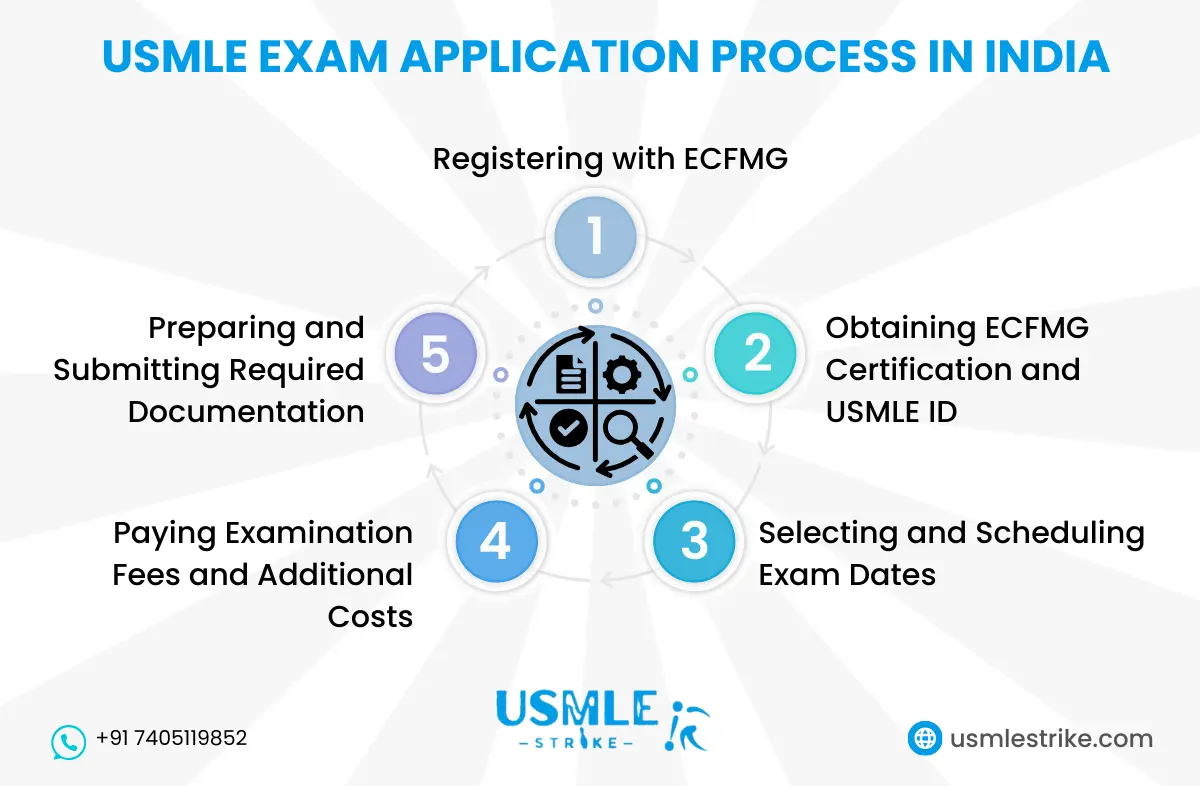
How to Apply for USMLE From India
| Step | Action | Details |
|---|---|---|
| 1 | Create ECFMG account | Register and get USMLE/ECFMG ID |
| 2 | Fill Step 1 Application | Complete form on ECFMG site and pay the fee |
| 3 | Complete Form 183 | Get Form 183 signed/stamped by your medical school |
| 4 | Send Form 183 to ECFMG | Mail the form to ECFMG, Philadelphia |
| 5 | Receive Scheduling Permit | Wait 2–3 weeks to get your permit via email |
| 6 | Schedule Exam on Prometric | Use permit to choose date/location on Prometric website |
USMLE Exam Centers in India
Indian students can take the USMLE exam in India at Prometric Test Centers located in key cities. Here’s a list of cities where you can take the USMLE:
- New Delhi
- Bangalore
- Mumbai
- Hyderabad
- Chennai
- Kolkata
These USMLE exam centers in India provide the same testing environment as centers in the U.S., ensuring a seamless experience for Indian candidates.
How to Become a U.S. Doctor as an IMG From India
For Indian medical graduates, the path to becoming a licensed physician in the U.S. involves multiple steps beyond passing the USMLE exam in India. Here’s a breakdown of the process:
- Step 1: Pass the USMLE Exam:
- Successfully complete Step 1, Step 2 CK, and Step 3 of the USMLE exam. These are essential milestones for obtaining a medical license in the U.S.
- Step 2: Apply for Residency:
- After passing the USMLE exams, you’ll need to apply for residency through the Electronic Residency Application Service (ERAS).
- Use your scores, medical transcripts, and recommendation letters to strengthen your application.
- Step 3: Visa Application:
- If you are selected for a residency program, apply for a J-1 or H-1B visa to work and train in the U.S.
- Step 4: Complete Residency:
- Residency training typically lasts between 3 to 7 years, depending on the specialty.
- Step 5: Obtain a Medical License:
- After completing residency, you’ll need to apply for a state medical license to practice independently in the U.S.
By following this structured pathway, Indian graduates can successfully transition from practicing in India to becoming licensed physicians in the U.S. after passing the USMLE exam in India.
Conclusion
To sum up, taking the USMLE course to prepare for the USMLE exam in India from the best coaching centre like USMLE Strike would be highly beneficial for medical aspirants to ace the exam with outstanding results. They get a customized study plan, preparation tips, and strategies with standard study materials, making it cost-effective without compromising the quality of USMLE preparation. Additionally, understanding the USMLE Step 1 fees India helps students plan their finances effectively while receiving top-notch guidance from expert faculty, ensuring a smooth and successful journey toward their medical career in the USA.
Read also: USMLE Step 2 Questions