

Every USMLE cycle comes with its own set of rumors. Some get passed down from one class of students to the next without anyone checking if they are still true. Others come from a single bad experience that got generalized into a rule. Either way, believing the wrong thing about this exam can quietly steer your prep in the wrong direction, so it is worth sorting out what actually holds up.
This guide walks through what the USMLE is actually for, the myths that come up most often, and what tends to be true instead.
What the USMLE Actually Checks
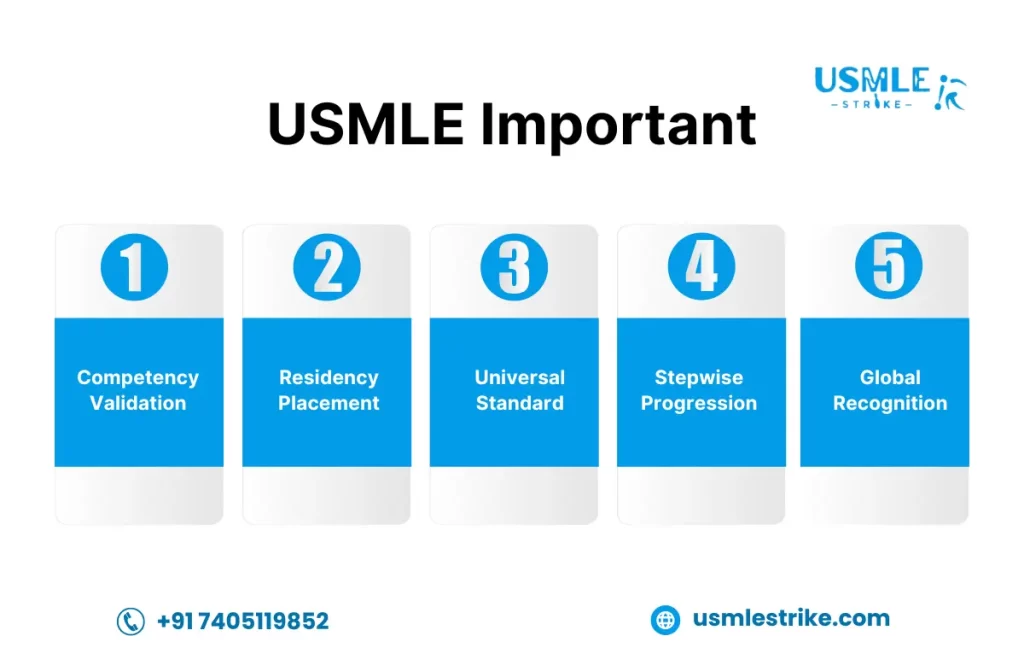
The primary purpose of the USMLE is to provide a common assessment used in the medical licensure process in the United States. Each Step evaluates different aspects of medical knowledge and clinical decision making, and it applies the same bar to every applicant regardless of where they went to school, which is part of why it also carries so much weight in residency applications.
The exam sequence covers different things at each stage. Step 1 focuses on the foundational sciences, things like anatomy, pathology, and pharmacology, and is scored as pass or fail. Step 2 CK tests how you apply that knowledge to diagnosing and managing real clinical cases, and is scored numerically. Step 3 checks whether you are ready to manage patients with more independence, and closes out the sequence.
If your notes still mention a Step 2 CS or a clinical skills exam with a separate pass or fail result, that part is outdated. Step 2 CS was permanently discontinued in January 2021 and is no longer part of the USMLE sequence. Clinical skills assessment now happens through other medical education and licensing processes rather than through a separate USMLE Step 2 CS exam.
Common Myths, and What is True Instead
Myth: More hours always means a higher score. Reality: Hours alone do not move your score much. Active recall, spaced repetition, and spending your time on high yield material tend to matter more than sheer volume. Piling on hours without a clear structure often leads to burnout, which works against you rather than for you.
Myth: A high score guarantees you match. Reality: Scores are one part of residency selection. Programs may also weigh clinical experience, letters of recommendation, research, the overall application, and interview performance. Treating your score as the only thing that counts can pull your attention away from the parts of your application that also need work.
Myth: You have to memorize everything. Reality: The exam is built to test how you use information, not just whether you can recall it. A solid conceptual understanding of high yield material tends to serve you better than trying to memorize your way through everything, since most questions ask you to reason through a scenario rather than recite a fact.
Myth: Practice exams are not worth the time. Reality: Practice exams are one of the more useful things you can do. They help you get comfortable with the format and pacing, and they are one of the better ways to find out where your actual knowledge gaps are.
Myth: Your score defines how good a doctor you will be. Reality: Your score reflects how you performed on one exam, not your ability as a physician. Clinical skill, how you work with patients, and how you function on a team matter just as much, and none of those show up in a score report.
Myth: The 2026 format changes mean the exam content is completely different now. Reality: In 2026, USMLE introduced updated test delivery software and changed the number and length of blocks for Step 1, Step 2 CK, and Step 3. The total number of items and the overall exam length stayed the same. What changed is the pacing and interface, not the content being tested.
What Residency Programs Actually Look At
Some specific myths come up again and again about how residency programs use USMLE scores, so it is worth addressing them directly.
Myth: programs rank applicants by score alone. More accurate: scores are one input among several. Personal statements, letters of recommendation, and clinical experience all factor into how an application is read.
Myth: a lower score rules you out of matching anywhere strong. More accurate: plenty of applicants with average scores have matched into strong programs by being well rounded elsewhere in their application. A single number rarely tells the whole story a program is looking at.
What Tends to Actually Help
A few things come up again and again as genuinely useful, regardless of which myth you might have heard.
Study with structure, not just volume. Active recall and spaced repetition beat long unfocused sessions almost every time.
Use practice exams throughout your prep, not just at the end. They tell you where the gaps actually are, which is more useful earlier than later.
Build your application beyond your score. Clinical rotations, research, and how you come across in person all carry real weight.
Do not let a single rumor set your whole strategy. If something you heard about the exam sounds extreme in either direction, it is worth checking against a current, reliable source before you build a study plan around it.
Final Thoughts
The USMLE is a real hurdle, but a lot of the stress around it comes from myths that outlived their accuracy or were never quite true to begin with. Step 2 CS is gone. Your score is one part of your application, not the whole thing. Hours alone do not guarantee a good result, structure does. Once you clear out the myths, what is left is a more manageable, more honest picture of what the exam actually asks of you.